Google Cloud Next is always a great indicator on where the enterprise tech stack is heading. This year’s event in Las Vegas didn’t disappoint, and if you sat through the keynotes and walked the show floor like I did, a few signals came through loud and clear.
Here’s my take on what mattered most at Google Next ’26, and what it means for how teams will monitor, manage, and optimize their cloud environments going forward.
The Agentic Enterprise Is No Longer Theoretical
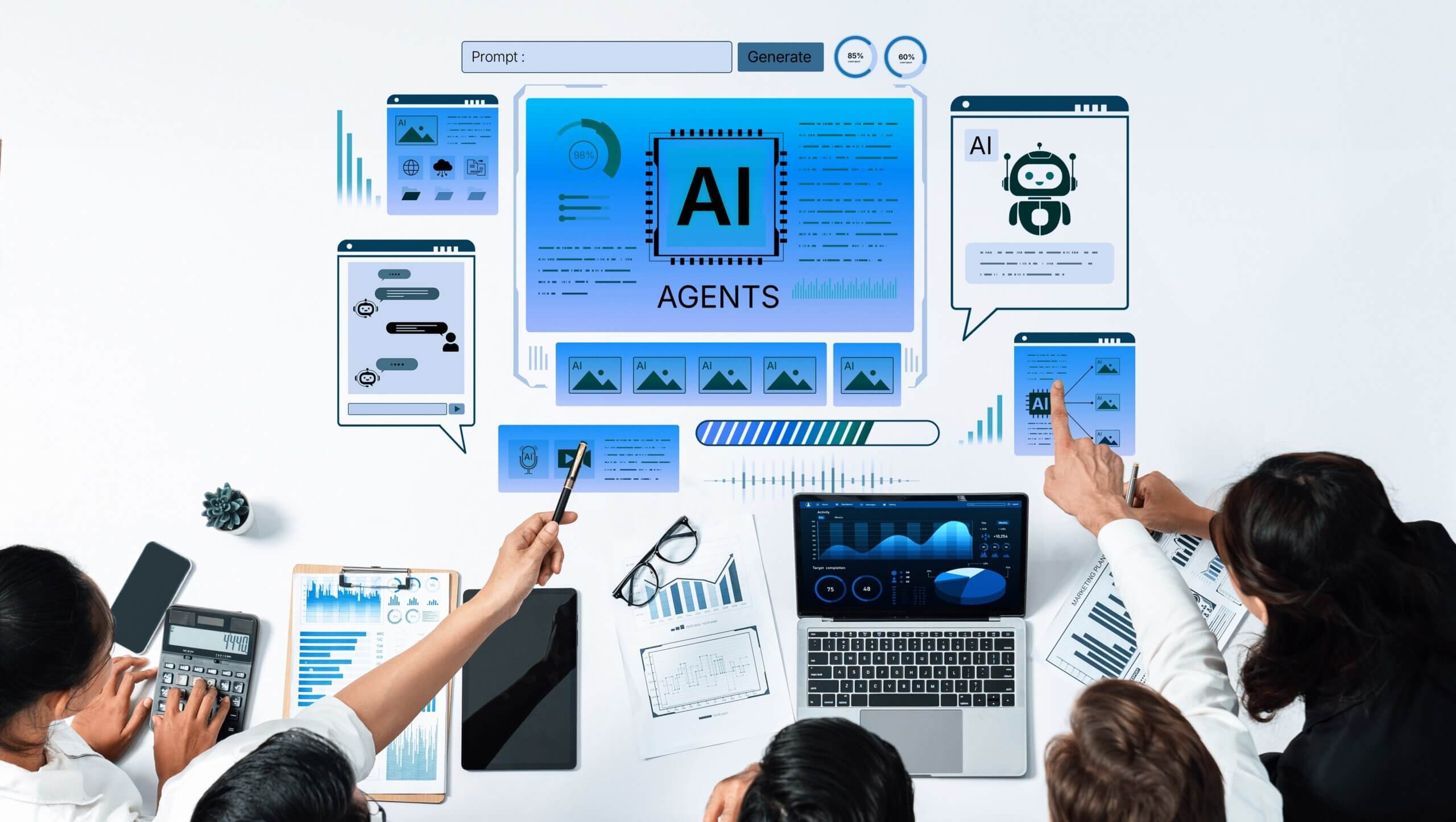
If there was one phrase you couldn’t escape this year, it was “agents.” Google leaned in hard, launching the Gemini Enterprise Agent Platform replacing Vertex AI as the umbrella for how enterprises will build, govern, and operate AI agents. The platform spans everything from agent development kits and model gardens down to agent observability, governance, and an “Agentic Defense” layer.
Two announcements stood out as particularly relevant for anyone responsible for keeping cloud environments healthy:
Google Cloud Assist Investigations brings automated, AI-driven root cause analysis directly into the Google Cloud console. Instead of an engineer manually pivoting through logs, metrics, and traces when something breaks, an agent kicks off an investigation and surfaces likely causes. It’s a clear signal that the era of fully manual incident triage is winding down.
Cross-Cloud Lakehouse lets you query data sitting in other cloud providers directly from Google Cloud, using BigQuery, Dataproc, and Apache Spark. No more lift-and-shift migrations or fragile ETL pipelines just to run unified analytics. For multi-cloud organizations — which is most of them now — this is a meaningful step toward treating data as a single fabric regardless of where it physically lives.
The bigger picture: Google is betting that the enterprise stack of the next five years will be multi-cloud and built around autonomous agents that investigate, decide, and act; not just dashboards that humans watch.
OpenTelemetry Is Now the Default Way to Watch AI
Across the observability sessions, one pattern was unmistakable: OpenTelemetry (OTEL) and distributed tracing are becoming the de facto foundation for monitoring AI workloads.
Sessions like “Improve and Scale Agent Quality with OTEL,” Neo4j’s talk on “Observability at Scale,” and PayPal’s deep-dive on their “Agentic SRE” platform all converged on the same idea. When your application is no longer a deterministic request/response system but a chain of LLM calls, tool invocations, and agent decisions, traces are the only artifact rich enough to tell you what actually happened.
PayPal’s session was particularly interesting. They walked through an entire SRE agent ecosystem — agents for architecture review, launches and rollouts, experiments, observability, health, resource allocation, and incident troubleshooting. Each agent had sub-agents handling specialized tasks. It’s a peek into where mature SRE organizations are heading, humans setting strategy and reviewing decisions, agents doing the operational work.
Observability Data Is Becoming Business Data
Outside of the agent and tracing conversations, the most interesting trend was the use of OTEL data to drive business decisions, not just operational ones.
Neo4j shared how they pipe operational telemetry to their customer success teams to identify churn risk before it manifests. The signal a customer’s environment sends — error rates, latency patterns, feature usage — turns out to be a leading indicator of renewal health. That’s a meaningful shift. Observability data has historically lived in the SRE silo. Increasingly, it’s becoming a strategic asset for product, CS, and revenue teams.
If you’re building or buying observability today, this is worth thinking about: who else in your organization should have access to this data, and in what form?
Where Virtana Fits
Most of what I saw at Next ’26 reinforces the direction Virtana has been building toward: hybrid and multi-cloud are here to stay, AI workloads need a fundamentally richer observability layer than traditional apps, and the next generation of observability needs to be agentic, not just dashboards, but systems that investigate and act.
A few places this connects to what we do at Virtana:
- Cross-cloud visibility is core to Virtana. As Google opens up cross-cloud query capabilities, the case for a single, vendor-neutral view of cost, performance, and capacity across AWS, Azure, GCP, and on-prem only gets stronger.
- AI-driven investigations like Google Cloud Assist are powerful, but they’re scoped to a single cloud. Enriching that signal with the broader infrastructure context Virtana already collects is where things get really interesting.
- Turning telemetry into business outcomes — the Neo4j approach of using operational data to inform CS and revenue teams aligns with how Virtana thinks about making observability data useful beyond the SRE org.
The Takeaway
The one big thing at Google Next ’26 was the agentic enterprise driving more autonomy, but alongside that was a steady drumbeat of more multi- and hybrid-cloud infrastructure and telemetry driving not only operational but also strategic decisions.
The teams that will get the most value from all this aren’t necessarily the ones adopting every new feature on day one. They’re the ones thinking carefully about how agents, telemetry, and multi-cloud data fit into a coherent operating model that connects to driving real business value. That’s the work ahead.
See how Virtana delivers unified observability across your entire estate — from on-prem and multi-cloud infrastructure to Google Cloud workloads and the new wave of Gemini and agentic AI capabilities. Get in touch to learn more.

David McNerney
David McNerney is Director of Product Management at Virtana, leading Application Observability, Container Observability, and Service Observability. He focuses on building the cloud and hybrid monitoring capabilities that enable Global 2000 enterprises to resolve incidents faster and optimize infrastructure costs.